





Let’s look at four very simple strategies that any language teacher can start using today to make their classes more neuro-inclusive.
Analogue clocks:
You set an activity in class for students to work on individually. You tell them they have 30 minutes to complete it. They all start working, except for the one student who always stares out the window. She seems lost in her thoughts, or is she bored? Whatever it is, she’s not working like the rest. And then, when you tell them “five minutes left”, this student freaks out, starts writing frantically, and hands in a badly written, poorly structured, and incomplete piece of work.
Does that ring a bell?
Many students with dyslexia and ADHD struggle with time. This is called time blindness. It’s not that they are unable to read a clock; it’s rather that the whole concept of time is different for them. Deadlines, estimating how long something will take, thinking that you have enough time to hang the laundry before going to your mother-in-law’s for lunch, missed appointments, being late… always being late.
It’s not on purpose. It’s something many of us even as adults find really difficult.
A quick tip for your classroom? Use analogue clocks.
This will make the passing of time visual and help your neurodivergent students organize their work within the timeframe you have set for them.
Freedom to move:
How many times have you told a student to sit still? Or to stop rocking their chair? Or to stop clicking their pen? The restless, sometimes stimming, behaviour of neurodivergent students can be an absolute pain. Especially if you think it’s something they do on purpose to annoy you, not to mention how it might disrupt their classmates as well.
In the majority of cases with your neurodivergent students, this is something outside their control. It’s an automatic response to feeling overwhelmed, stressed, bored, or a need to self-regulate.
Many of us don’t even realize when our ticking, rocking or moving upsets the people around us. We don’t even realize we’re doing it.
Your students with ADHD have a surplus of energy and need to channel that energy one way or another. They also need these constant movements to regulate their emotions, as well as their ability to pay attention. Sitting still and concentrating at the same time is not an option.
So, when you say “sit still and pay attention”, they have to choose between the first, sitting still, or the latter, paying attention. It is possible for some people with ADHD to learn to regulate their stimming and movement over time, but that takes years of training and practice.
Instead, you can give your ADHD students more freedom to move. You can ask them to clean the whiteboard for you, hand out worksheets to the rest of the class, stand by their desk instead of sitting, or take a note to the school’s admin every time you see they need a movement break.
But you can also build in short movement breaks for the whole class. Nothing special, just something in between tasks: standing up, stretching, maybe a few jumping jacks, some 30-second crazy dancing, anything that gets the blood flowing through the brain and will help your ADHD student, as well as the others, regain their attention.
Less text and more visuals:
You probably already know by now that long texts are to a dyslexic student like a maze without an exit.
Therefore, it is always advisable to avoid using long texts, especially on slides and worksheets (with the exception of reading activities).
Using bullet points with key information instead of long paragraphs makes it easier for your dyslexic students to understand what is important. Accompanying that written information with visual cues is key for their learning. Neurodivergent students in general tend to be very good visual thinkers, and thus learners. Don’t we say that a picture is worth a thousand words? Well, for them that is absolutely true.
But the image should NOT be the main focus. Teaching languages is NOT about using many visuals. It is about using visuals that enhance students’ processing speed and depth of the information we are working with. The images are the supports neurodivergent students need to understand the topic better.
Adapted texts:
One of the easiest, and probably most effective, adjustments we can make to enhance the learning experience of our neurodivergent learners is adapting and formatting any text.
This is all about helping students’ brain focus, recognizing the text, processing it and understanding it.
Adapting or formatting any text can be done in six simple steps:
In my teacher training, I walk participants through these steps and when we’re done, I always ask which text they would prefer: the “old” version or the new, adapted one. 99% prefer the adapted version. Not because they’re dyslexic themselves, but because it is also easier for them to process information that way.
And that is the beauty of any adjustments that you put in place for your neurodivergent learners.
Ramps are made so any person in a wheelchair can enter a building. But they aren’t the only ones to use the ramp. Elderly people, parents with a pram, a delivery person with their trolley, a kid on their bike, tourists with their suitcases, and any other person who prefers the ramp over the stairs.
The same is true for any adjustments for neurodivergent learners. We put them in place because they really benefit from them. It’s a way of creating a level playing, or learning, field. But in the end, our whole community can, may and will use them.
Offering better learning opportunities for your students with dyslexia, ADHD and autism is never about doing something different for them than for the rest. It’s never about doing more. It’s also never about working harder. It’s rather about working smarter, and making sure that what we do will help all our students learn the language.
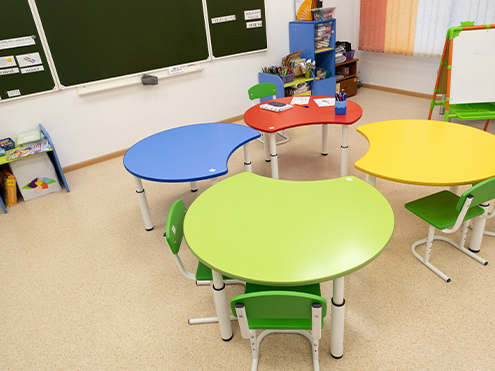
The classroom is more than a place where learning happens. When space, organisation, and wellbeing are considered together, it becomes a dynamic environment that supports curiosity, concentration, and student growth every day.
Read this post

Exam season is upon us once again and many of our students will be taking Cambridge exams to demonstrate their level and consolidate the learning they’ve built up throughout the year. Secondary students might be taking the A2 Key or B1 Preliminary, or one of Cambridge’s higher-level qualifications such as B2 First for Schools or the C1 Advanced.
Read this post